Maybe things are heating up with someone new. Maybe you've been dodging the topic with a long-term partner for years. Either way, the thought of saying the word "vaginismus" out loud can make your stomach drop. If that's you, you're in good company. In clinical settings, vaginismus is estimated to affect roughly 5% to 17% of people seeking care for sexual concerns (Pacik & Geletta, 2017).
Here's what I tell clients who feel this fear. Learning how to talk to your partner about vaginismus is one of the most powerful steps you can take. It won't erase the nerves. It will take the secrecy out of the bedroom, and secrecy is heavy to carry.
Below, you'll find what vaginismus is, a simple framework and script, when to bring it up, and how to keep pleasure front and center.
What is Vaginismus?
Vaginismus is an involuntary tightening of the muscles around the vaginal opening when penetration is attempted or even anticipated. You're not "doing it on purpose," and you can't simply relax your way out of it. It can bring anything from mild discomfort to sharp, intense pain.
In the diagnostic world, vaginismus falls under genito-pelvic pain/penetration disorder, a category that includes pain, fear of pain, and pelvic floor tension related to penetration (American Psychiatric Association, 2022). A few things are worth knowing:
• Some people have had vaginismus for as long as they can remember. Others develop it after years of pain-free penetrative sex.
• Researchers point to a mix of contributors, including trauma, anxiety about sex, fear of pain, relationship dynamics, cultural and religious messages, and limited sex education. For some people, there's no clear cause at all (McEvoy et al., 2021).
• Vaginismus usually doesn't directly affect your ability to feel desire, get aroused, or have an orgasm through other kinds of touch.
Why This Conversation Matters for Both of You?
Sexual pain doesn't happen in a vacuum. Research on couples living with genito-pelvic pain shows that how partners understand, talk about, and emotionally respond to the pain shapes both people's sexual and relationship well-being (Rosen & Bergeron, 2019). Couples who can name feelings and problem-solve together tend to cope better than those who avoid the topic. This talk isn't just a disclosure. It's an invitation to become a team.
How to Talk to Your Partner About Vaginismus: A Simple Framework
The hardest part is starting. Your partner may never have heard of vaginismus, so I recommend starting broad and then zooming in.
Step 1: Set the tone
Let your partner know you have something important to share. Put the phones down, sit facing each other, and make eye contact.
Step 2: Give context before the label
Start with what you experience, then name it. "Vaginismus" lands more gently once your partner has something to attach it to.
Step 3: Describe your pattern
Share what happens for you physically and emotionally. When does the tightness show up? What does it feel like? What goes through your mind?
Step 4: Name your triggers
Talk about what tends to make symptoms flare, such as feeling rushed, being tired or stressed, certain positions, or going straight to penetration.
Step 5: Talk about what feels good
This is the part people forget. Tell your partner what you love or what you’s like to explore. This way, the conversation ends with possibility instead of a closed door.
A script you can borrow:
"Hey, I want to talk to you about something important. Just so you know, I have something called vaginismus. This means that during sex, my muscles get really tight without me even thinking about it or being able to control it. For you, it might be feeling really good and really tight, but for me, sometimes it can cause discomfort or even intense pain. So if we have sex, I may need to stop immediately or change positions. But even though this is a thing, there are also ways that I really enjoy having sex, like…"
Make it yours. It also helps to jot your main points down beforehand. Getting the thoughts out of your head and onto paper makes them much easier to say out loud.
When Is the Right Time to Bring It Up?
There's no perfect moment, and you get to decide what feels right. As a general guide, it's best to have this talk before penetration is on the table.
- New relationship: Once an honest conversation feels safe, and before things move toward penetration. That might be at the end of a date, or on the couch before heading to the bedroom.
- Things are moving fast: It's okay to hit pause. Slow down, make eye contact, and let your partner know there may be times you need to adjust or stop.
- Long-term partner: Pick a calm, unhurried moment outside the bedroom, not right after a painful attempt when emotions are raw.
And remember, this is an ongoing conversation. If there's ever a flare-up or you're in too much pain to continue, say so. Once you've had the first talk (and you will get through it), the follow-ups get easier.
Keeping Pleasure at the Center
When penetration feels like too much, pleasure doesn't have to stop. Oral sex, manual stimulation, mutual masturbation, grinding, and toys are all real sex. The more you share about what feels good, the less vaginismus gets to run the show.
Exploring Non-Penetrative Touch:
Sensate focus is a structured, step-by-step touch practice used in sex therapy to reduce performance pressure and help partners reconnect through sensation (Weiner & Avery-Clark, 2017). Dim the lights, light a candle, and move through these stages over several sessions. Stay at any step as long as you need.
- Non-genital touch. One partner explores the other's body, playing with different pressures and speeds. The partner receiving touch has one job: notice what they feel. No performing, no goals.
- Genital and breast touch. Things warm up a bit here. The giver can now include the breasts and genitals, but the goal is still to pay attention to sensation, not to build arousal. This practice is meant to be sensual, not sexual. If things start heating up, slow down. In this step and the first one, feel free to switch roles, and either partner can stop at any time.
- Add lotion or oil. At the start of a session, or partway through, bring in a hypoallergenic lotion or body-safe oil. The added glide can make sensations feel richer and more delicious for the receiver. (Just keep oils away from latex condoms, since oil can break them down.)
- Mutual touch. Now you both get to explore at the same time. Use your hands, your mouths, or both.
- Genital-to-genital contact. In this last step, you gently rub your genitals together. If and when you feel ready to move toward intercourse, start with partial penetration. Play with speed and pressure to find what feels good, and keep checking in with each other the whole way through.
How dilators can fit into the picture
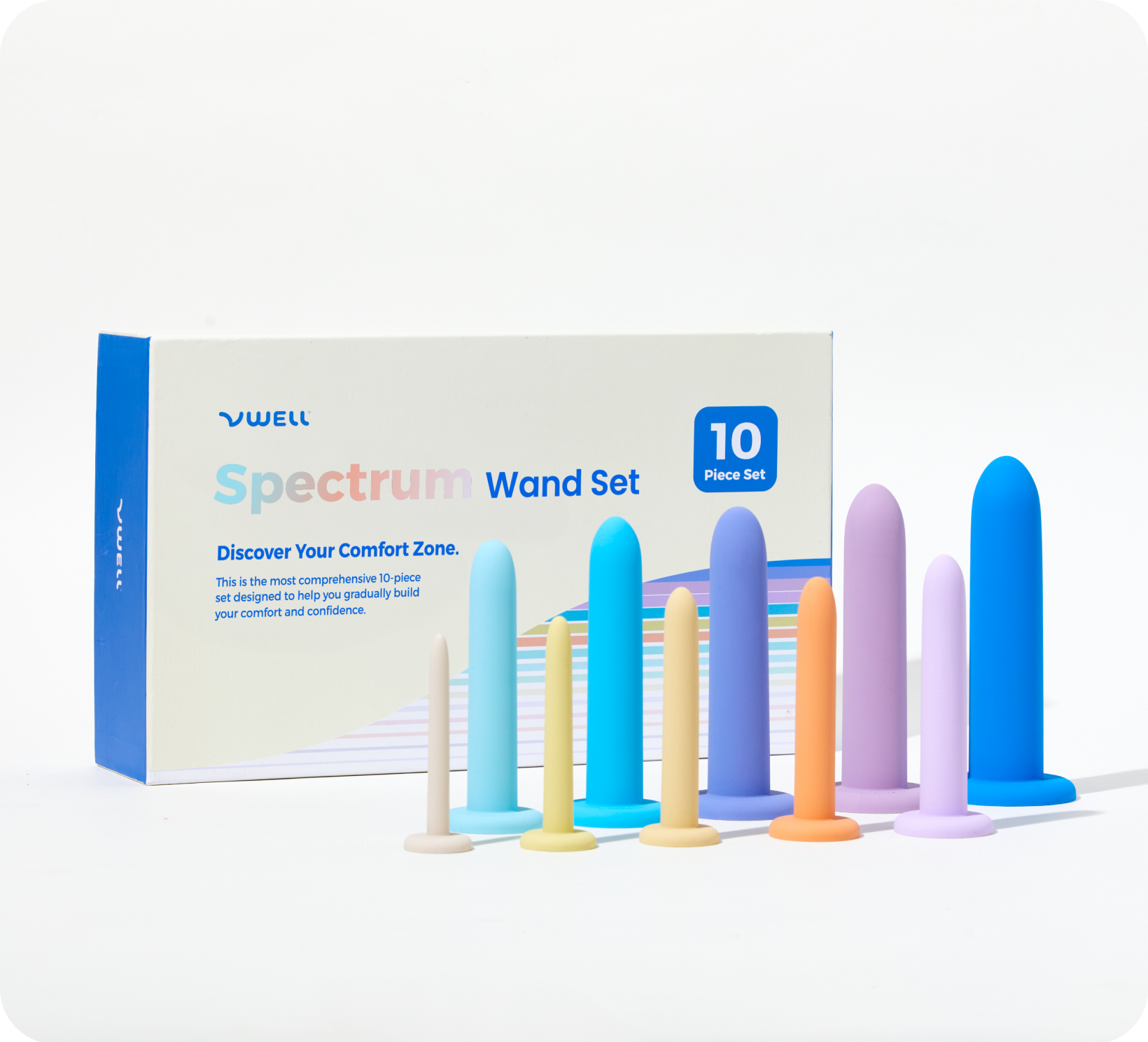
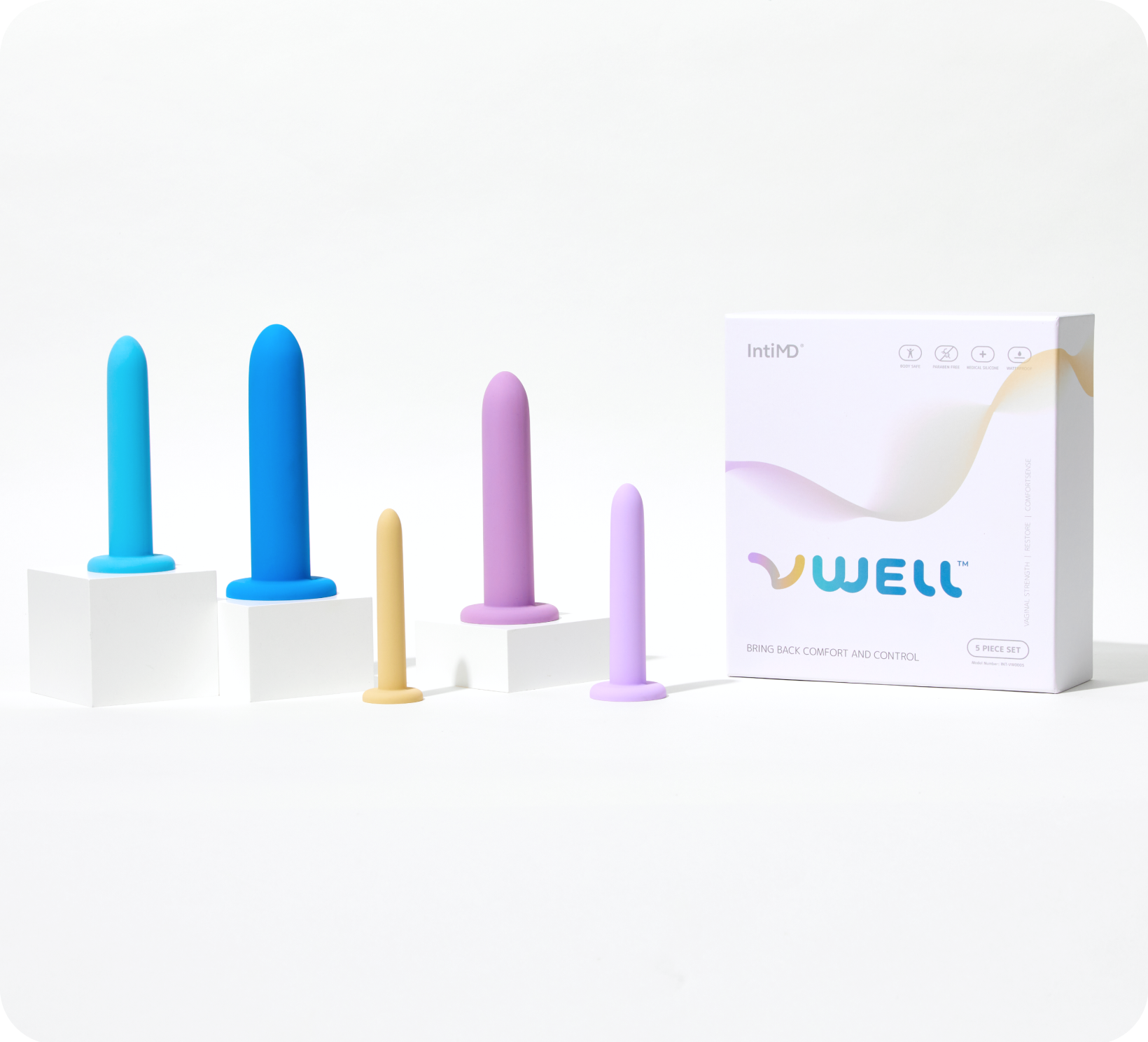
Many people with vaginismus work with vaginal dilators, smooth graduated tools that help the body get used to penetration gradually, at your own pace and on your own terms. A recent meta-analysis found dilator therapy helpful for many people, with the strongest results when physical and psychological approaches are combined (Zulfikaroglu, 2025). Ideally, use them with guidance from a pelvic floor physical therapist or other trusted provider.
If you're just starting out, VWELL's Silicone Dilator Set (5-Piece Kit) is a beginner-friendly option, with graduated sizes that let you move forward one small step at a time. You can also browse the full VWELL dilator collection to find what fits your body and goals. Use my code DRHOLLYWOOD15 at checkout.
Feeling Nervous? Remember This
- Your pleasure matters just as much as your partner's.
- Having vaginismus doesn't make you powerless. Naming your limits is empowering.
- Most partners want you to enjoy sex, and they enjoy it more when you do.
What if my partner reacts badly?
Sometimes a partner needs time to process. But if they dismiss your pain or pressure you, that tells you something important. You deserve someone who prioritizes your comfort, and your worth reaches far beyond penetrative sex.
When to Reach Out for Professional Support
Talking with your partner is a big step, and you don't have to do the rest alone. A pelvic floor physical therapist, a gynecologist or other medical provider familiar with sexual pain, and a sex therapist can each play a role. Combined approaches often work best (Zulfikaroglu, 2025).
In my practice, I work with individuals and couples navigating sexual pain, using approaches like EMDR, the Gottman Method, and Emotionally Focused Therapy (EFT). I see clients virtually throughout California and offer in-person couples intensives in Mission Viejo. To find an AASECT-certified sex therapist near you, the AASECT referral directory is a great place to start.
What to expect from sex therapy?
FAQ
Can you still have sex with vaginismus?
Yes. Vaginismus affects penetration, not your capacity for desire or pleasure. Oral sex, manual touch, toys, and outercourse are all real sex, and many people work toward comfortable penetration over time with support.
Do dilators help with vaginismus?
For many people, yes. Research suggests dilator therapy can be effective, especially when combined with pelvic floor physical therapy or psychological support (Zulfikaroglu, 2025). Go at your own pace and check in with a provider if you can.
Final Thoughts
Vaginismus isn't a relationship deal-breaker, but it does shape how you connect. The good news? It's treatable, and you don't have to live with it forever. Believe in yourself, don't settle for a partner who isn't supportive, and remember that pleasure is still yours to claim.
Know your body. Own your pleasure. Lose the shame. Have a question about starting this conversation? Drop it in the comments. Your question might be exactly what someone else needs answered too.
This post is educational and is not a substitute for individualized therapy or medical care. This post contains affiliate links. If you purchase through them, I may earn a commission.
About the Author
Dr. Holly Wood, PhD, LMFT, CST, also known as The Hollywood Sexologist, is an AASECT-certified sex therapist in California specializing in sex therapy, trauma recovery, and relationship education. Learn more at thehollywoodsexologist.com and on Youtube.

References
American Psychiatric Association. (2022). Diagnostic and statistical manual of mental disorders (5th ed., text rev.). https://doi.org/10.1176/appi.books.9780890425787
McEvoy, M., McElvaney, R., & Glover, R. (2021). Understanding vaginismus: A biopsychosocial perspective. Sexual and Relationship Therapy. Advance online publication. https://doi.org/10.1080/14681994.2021.2007233
Pacik, P. T., & Geletta, S. (2017). Vaginismus treatment: Clinical trials follow up 241 patients. Sexual Medicine, 5(2), e114–e123. https://doi.org/10.1016/j.esxm.2017.02.002
Rosen, N. O., & Bergeron, S. (2019). Genito-pelvic pain through a dyadic lens: Moving toward an interpersonal emotion regulation model of women's sexual dysfunction. The Journal of Sex Research, 56(4–5), 440–461. https://doi.org/10.1080/00224499.2018.1513987
Weiner, L., & Avery-Clark, C. (2017). Sensate focus in sex therapy: The illustrated manual. Routledge.
Zulfikaroglu, E. (2025). Vaginismus treatment: A systematic review and meta-analysis of contemporary therapeutic approaches. The Journal of Sexual Medicine. Advance online publication. https://doi.org/10.1093/jsxmed/qdaf295